
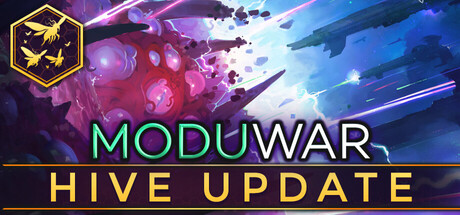
Compara los precios de Moduwar en tiendas de claves de confianza y encuentra la mejor oferta. Desarrollado por Biohex Studios. Publicado por Firesquid. Lanzado el 3/6/2025. Disponible en PC, Linux. Géneros: Indie, Strategy, Early Access.

Forget building a barracks. In Moduwar you grow acid glands, split off scouting tentacles, and hurl chunks of your own body at the enemy. It's the weirdest RTS hook in years, and it mostly works.

I cover shooters for a living, so when an RTS lands on my desk I approach it the same way I clock a new battle royale: what's the core loop, how high is the skill ceiling, and will the multiplayer still have a pulse in six months. Moduwar gave me one genuinely unexpected answer to all three. The core loop is unlike anything currently on the market. You start as a single heart floating in water on the alien world of Arkadia, then tile by tile you grow organs off your body, acid glands, frost glands, electric emitters, eye-bulb stems, cutting tentacles, each one slotting onto your living frame like biomechanical Lego. When you want to attack you literally detach pieces of yourself, send them across the map to flank or distract, and snap them back when you're done. Smaller detached chunks move faster than your main body, so split aggression is a legitimate micro skill, not just a gimmick. The merge mechanic is mouse-over-and-command simple, which means the barrier to entry is low even for people who never touched a Zerg macro. The mode spread is solid for an Early Access title. Campaign is there with live-action FMV cutscenes that lean hard into a retro Command-and-Conquer aesthetic, campy delivery and all. Skirmish pits you against an AI opponent that follows the same growth rules you do, which is a nice design touch even if the AI is not going to stress test a veteran RTS player. Survival and Arena add wave-defense variety, though both modes are APM-heavy and get repetitive faster than the main modes. The big caveat for multiplayer is that it is currently PvP only, no co-op available yet. Up to four players can compete, which should give the PvP side some legs, but co-op fans will need to wait for a future update. Multiplayer lobby options are also limited right now, something the community has flagged and the devs appear aware of. Quality-of-life is the honest rough edge in this build. There is no attack-move command to speak of, tooltips do not fully explain what each organ combination actually unlocks, and the APM demand during large engagements spikes in a way that feels unmanaged rather than intentional. Players have specifically called out the need for pathfinding improvements and a tactical pause or slow-motion option, both fair asks. There is also a notable audio balancing issue where cutscene and narration volumes jump wildly between levels, which headphone users should know about before they get surprised at high volume. These are fixable things, and the development team is actively communicating with the community, but they are real frictions right now, not hypothetical ones. No unit cap or platform size limit in skirmish is a genuine sandbox freedom that partially offsets the polish gaps. For strategy players the concept earns its buzz. The organ tree and split-merge system create real build decisions: do you stack acid glands for sustained pressure, lean into frost glands to slow and control, or build a hive-organ swarm and flood the map? Each answer plays differently. For the multiplayer-first crowd, the PvP side is early and the playerbase is still forming, so queue health is an open question. The Linux native version is confirmed functional with an ongoing cursor bug having already been patched, which is a good sign for dev responsiveness. At its current price point and EA state, the concept alone justifies interest from RTS enthusiasts who are genuinely tired of every new entry playing like a StarCraft mod. Fred, Scout Team

Moduwar
IndieStrategyEarly Access

Moduwar

3 jun 2025Biohex StudiosFiresquid
GamerScout opina

Forget building a barracks. In Moduwar you grow acid glands, split off scouting tentacles, and hurl chunks of your own body at the enemy. It's the weirdest RTS hook in years, and it mostly works.

PCLinux
Steam Deck Playable
Mejor precio disponible
€0.00
en N/A
Mínimo histórico: €1.49

Comparar precios(0 tiendas)

Cargando precios...

We may earn a commission when you buy games through links on this page — at no extra cost to you. It never affects our rankings or verdicts.

Historial de precios

Historical low
€1.495 Jun 2026
Keyshops
€1.37€1.45€1.53€1.615 Jun11 Jun17 Jun22 Jun28 Jun
Tracking prices since 5 Jun 2026
Create alert

Capturas y multimedia

Acerca de Moduwar

I cover shooters for a living, so when an RTS lands on my desk I approach it the same way I clock a new battle royale: what's the core loop, how high is the skill ceiling, and will the multiplayer still have a pulse in six months. Moduwar gave me one genuinely unexpected answer to all three. The core loop is unlike anything currently on the market. You start as a single heart floating in water on the alien world of Arkadia, then tile by tile you grow organs off your body, acid glands, frost glands, electric emitters, eye-bulb stems, cutting tentacles, each one slotting onto your living frame like biomechanical Lego. When you want to attack you literally detach pieces of yourself, send them across the map to flank or distract, and snap them back when you're done. Smaller detached chunks move faster than your main body, so split aggression is a legitimate micro skill, not just a gimmick. The merge mechanic is mouse-over-and-command simple, which means the barrier to entry is low even for people who never touched a Zerg macro. The mode spread is solid for an Early Access title. Campaign is there with live-action FMV cutscenes that lean hard into a retro Command-and-Conquer aesthetic, campy delivery and all. Skirmish pits you against an AI opponent that follows the same growth rules you do, which is a nice design touch even if the AI is not going to stress test a veteran RTS player. Survival and Arena add wave-defense variety, though both modes are APM-heavy and get repetitive faster than the main modes. The big caveat for multiplayer is that it is currently PvP only, no co-op available yet. Up to four players can compete, which should give the PvP side some legs, but co-op fans will need to wait for a future update. Multiplayer lobby options are also limited right now, something the community has flagged and the devs appear aware of. Quality-of-life is the honest rough edge in this build. There is no attack-move command to speak of, tooltips do not fully explain what each organ combination actually unlocks, and the APM demand during large engagements spikes in a way that feels unmanaged rather than intentional. Players have specifically called out the need for pathfinding improvements and a tactical pause or slow-motion option, both fair asks. There is also a notable audio balancing issue where cutscene and narration volumes jump wildly between levels, which headphone users should know about before they get surprised at high volume. These are fixable things, and the development team is actively communicating with the community, but they are real frictions right now, not hypothetical ones. No unit cap or platform size limit in skirmish is a genuine sandbox freedom that partially offsets the polish gaps. For strategy players the concept earns its buzz. The organ tree and split-merge system create real build decisions: do you stack acid glands for sustained pressure, lean into frost glands to slow and control, or build a hive-organ swarm and flood the map? Each answer plays differently. For the multiplayer-first crowd, the PvP side is early and the playerbase is still forming, so queue health is an open question. The Linux native version is confirmed functional with an ongoing cursor bug having already been patched, which is a good sign for dev responsiveness. At its current price point and EA state, the concept alone justifies interest from RTS enthusiasts who are genuinely tired of every new entry playing like a StarCraft mod.

Fred
Fred · Scout Team

Shooters

Etiquetas

singleplayermultiplayerpvponline-pvpachievementstier:sub-5Organic Build SystemSplit-Merge MicroAPM-IntensiveFMV CutscenesWave DefensePvP-Only MultiplayerOrgan Tree ProgressionNo Unit Cap

Requisitos del sistema

Mínimos

OS
Windows 10
Memory
8 GB RAM
DirectX
Version 11
Network
Broadband Internet connection
Storage
2 GB available space
Graphics
Nvidia GTX 860 M or AMD HD 5870
Processor
Core i7-4710HQ or AMD FX 8800P

Recomendados

OS
Windows 11
Memory
16 GB RAM
DirectX
Version 12
Network
Broadband Internet connection
Storage
2 GB available space
Graphics
Nvidia GTX 960 or Radeon RX 470
Processor
Core i3-9100 or Ryzen 3 1300X

Sigue explorando

Community Discussion

Be the first to comment on Moduwar.

Reseñas y valoraciones

No hay valoraciones disponibles

Información del juego

Desarrolladora
Biohex Studios
Distribuidora
Firesquid
Fecha de lanzamiento
3 jun 2025

Alerta de precio

¡Recibe un aviso cuando el precio baje de tu objetivo!

Crear alerta

Compra mejor: guías útiles

¿Buscas más? Mira juegos como Moduwar →

Preguntas frecuentes sobre Moduwar

¿Cuánto cuesta Moduwar?

El precio de Moduwar cambia a menudo y varía según la tienda, la edición y la región. La tabla de precios en vivo de esta página compara las ofertas más baratas en stock de tiendas de claves de confianza como Eneba y Kinguin, para que siempre veas el precio más bajo actual antes de comprar.

¿Dónde puedo comprar Moduwar más barato?

Compara los precios de Moduwar en todas las tiendas verificadas en la tabla de precios de esta página. Listamos las ofertas de claves y tiendas más baratas en stock, actualizadas con frecuencia, para que siempre veas la mejor oferta actual antes de comprar.

¿En qué plataformas está disponible Moduwar?

Moduwar está disponible en PC, Linux.

¿Cuándo se lanzó Moduwar?

Moduwar se lanzó el 3 de junio de 2025.

¿Quién desarrolló Moduwar?

Moduwar fue desarrollado por Biohex Studios y publicado por Firesquid.