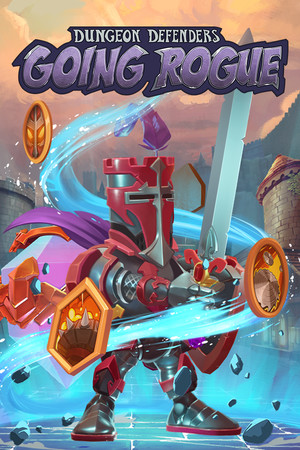

Dungeon Defenders
Four kids, one tavern, and a crystal that needs defending at all costs - if the idea of wiring Harpoon Turrets and Monk Auras into a co-op loot machine sounds like your weekend, Dungeon Defenders still holds up surprisingly well in 2026.
Comparar precios(0 tiendas)
Cargando precios...
We may earn a commission when you buy games through links on this page — at no extra cost to you. It never affects our rankings or verdicts.
Historial de precios
Capturas y multimedia
Acerca de Dungeon Defenders
I went in expecting a relic and came out with thirty extra hours missing from my calendar. Dungeon Defenders launched back in October 2011 and, by rights, should feel museum-dusty by now. Instead, the core loop - build phase, combat phase, repeat until your tower layout is a finely-tuned killzone or a humiliating pile of rubble - still clicks with the satisfying rhythm of a game that knew exactly what it wanted to be. The basics: you pick one of four starting classes (Squire, Apprentice, Huntress, Monk), each with a wildly different defensive toolkit. The Squire plants Harpoon Turrets and melee-focused Blockades, turning corridors into pincushions. The Apprentice conjures Fireball and Lightning Towers, though he needs Monk Strength-Drain Auras backing him up before those towers reach their potential - a design choice that quietly demands team synergy. The Monk radiates passive Auras that slow enemies, reduce incoming damage, and punish clustered mobs. The Huntress drops traps, hunts flying Wyverns with ranged attacks, and uses Gas Traps to stop late-game Djinn from dismantling your entire defense mid-wave. Later DLC expands the roster considerably - the Summoner, Series EV, Barbarian, and Jester all add new strategic layers - and the community is still debating optimal builds in 2026, which says something about the depth on offer. That depth is also where the tension lives. On lower difficulties the four classes play independently and the game feels loose and fun. Push into Nightmare mode and the meta tightens hard: you essentially need a Monk for Aura coverage, a Series EV for Buff Beams, and a Summoner's minions shoring up gaps. Builder roles and DPS roles separate into distinct specializations, and trying to run a hybrid character into endgame is a reliable path to frustration. The randomized loot system, with gear that can be permanently upgraded at the Forge, rewards the obsessive min-maxers while remaining approachable enough in the early campaign that casual players can coast on intuition for a while. The story connecting all these waves together is functionally nonexistent - a few lines of exposition every handful of stages - so if narrative payoff is your primary motivation, look elsewhere. The multiplayer is where the game lives and breathes, and also where its roughest edges show. With a good group of friends on voice chat, coordinating tower placement and lane coverage produces genuinely exciting results. With strangers, the experience is shakier: any player can sell another player's tower and pocket the mana, the shared Defense Unit cap incentivizes selfish overbuilding, and active lobbies in 2026 are thin enough that filling a random room to four players takes patience. Split-screen and Remote Play Together options help here - drag a friend into the session rather than gambling on public matchmaking. Solo play is technically viable on the base Apprentice or Summoner, but the game clearly resists it; enemy waves pour through multiple paths simultaneously in a way that feels designed to overwhelm a lone defender and reward a coordinated team. The tutorial is famously useless - a dense video rather than interactive guidance - so expect a rough first hour before the systems snap into focus. What's genuinely surprising is that Dungeon Defenders is still receiving updates in 2026, with trap damage rebalancing, new wave modifiers, and active Steam Workshop content extending the shelf life well past what a 2011 indie title has any right to offer. The UI shows its age, the mana-grab friction in co-op remains unresolved, and the XP grind to reach Nightmare-viable gear levels is long enough to test patience. But for players who want a co-op tower defense experience with real build variety, stat depth that rewards repeat playthroughs, and the specific chaos of watching a carefully laid Harpoon chokepoint evaporate under an Ogre charge - this one earns the hours it asks for.

RPGs
Etiquetas
Requisitos del sistema
Mínimos
- OS
- Windows XP
- Processor
- 1 Ghz Dual-Core CPU
- Memory
- 1 GB RAM Hard Disk Space: 2GB Video Card: Graphics Card with Shader Model 3 support, 256 MB video memory DirectX®: 9.0c Sound: DirectSound-compatible sound device
Recomendados
- Processor
- 2Ghz Dual-Core CPU
- Memory
- 2GB RAM Hard Disk Space: 2GB Video Card: Graphics Card with Shader Model 3 support, 512 MB video memory DirectX®: 9.0c Sound: DirectSoun…
Sigue explorando
Community Discussion
Be the first to comment on Dungeon Defenders.
Reseñas y valoraciones
Información del juego
- Desarrolladora
- Chromatic Games
- Distribuidora
- Chromatic Games
- Fecha de lanzamiento
- 18 oct 2011