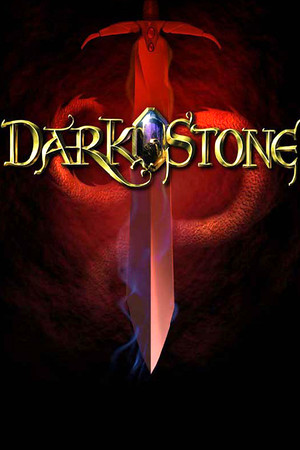
Compara los precios de Darkstone en tiendas de claves de confianza y encuentra la mejor oferta. Desarrollado por Delphine Software. Publicado por Microids. Lanzado el 25/9/2014. Disponible en PC. Géneros: Action, RPG.

A late-90s Diablo-adjacent dungeon crawler that holds up better than its obscurity suggests, especially if you want a two-character party system and cursed cloaks that spontaneously empty your bag.

I have a soft spot for the games that slipped through the cracks in 1999, and Darkstone is one of the more interesting casualties of its era. Developed by Delphine Software, it wore its Diablo DNA on its sleeve so openly that reviewers at the time practically wrote nothing else, which was genuinely unfair, because underneath the familiar click-to-kill loop there are some genuinely smart ideas that Blizzard itself later borrowed for Diablo II. The core hook that separates Darkstone from its inspiration is the dual-character system. You build and control two heroes simultaneously, swapping between them at will, and the game actively rewards pairing complementary classes. Run a Warrior alongside a Sorceress and you have a front-liner soaking hits while your spellcaster throws fireballs from a safe distance. The Sorceress (the female variant of the Wizard class) can even learn to transform into a werewolf once she masters the right spell, which is the kind of absurd detail that makes me like a game considerably more. The Monk and Priestess classes fill a support role with healing abilities that really shine in the local co-op mode, which supports up to four players. The Assassin/Thief line, meanwhile, rewards a more careful playstyle with ranged proficiency and a Perception skill that highlights traps before they gut you. Each class trains skills across eight incremental levels, funded by dumping basically all your gold into a very opinionated NPC, which gives progression a satisfying texture even if the stat ceiling gets fuzzy after level 35 or so. The world of Uma spans four sequentially unlocking lands, each with its own dungeon set and enemy roster. Quests are semi-randomly drawn from a pool of over twenty options per run, and items, dungeon layouts, and enemy placement shift between playthroughs, giving the whole thing genuine replayability on four difficulty settings. The village hub is compact and well-organised, with a training area, a banker, a provisioner (your characters can actually starve, and they age over time, which is a roguelike wrinkle that most dungeon crawlers of this generation quietly abandoned), and a pair of musicians you can tip for an original song. These details are small but they add texture to what could otherwise feel like a purely mechanical loop. On the downside, the writing is thin. The narrative exists mainly as scaffolding for the crystal-hunting objective and the boss fight with dragon-form Draak is, frankly, a health-potion-spamming endurance test rather than a satisfying climactic encounter. NPC dialogue is functional rather than memorable, and the sub-quests that townsfolk bring to you do gesture at worldbuilding without ever quite landing a story beat worth remembering. If you come in expecting Planescape: Torment-level character work, redirect your expectations firmly downward. The game is also showing its age in ways that matter: voice acting can break on modern systems, cutscenes are unreliable, and the inventory is punishingly small by contemporary standards. What Darkstone actually is, is a competent, occasionally charming piece of late-90s action-RPG craft with a dual-party mechanic that still feels underused twenty-five years on. Steam's community sits at roughly 79% positive across a modest review count, which tracks: it is not a flawed masterpiece, it is a solid curio that rewards players who can meet its age halfway and appreciate the design decisions that history overlooked. Monika, Scout Team

Darkstone

Darkstone

25 sept 2014Delphine SoftwareMicroids
GamerScout opina

A late-90s Diablo-adjacent dungeon crawler that holds up better than its obscurity suggests, especially if you want a two-character party system and cursed cloaks that spontaneously empty your bag.

PC
ProtonDB Gold
Mejor precio disponible
€0.00
en N/A
Mínimo histórico: €0.70

Comparar precios(0 tiendas)

Cargando precios...

We may earn a commission when you buy games through links on this page — at no extra cost to you. It never affects our rankings or verdicts.

Historial de precios

Historical low
€0.7015 Jun 2026
Keyshops
€0.65€0.69€0.72€0.765 Jun11 Jun17 Jun22 Jun28 Jun
Tracking prices since 5 Jun 2026
Create alert

Capturas y multimedia

Acerca de Darkstone

I have a soft spot for the games that slipped through the cracks in 1999, and Darkstone is one of the more interesting casualties of its era. Developed by Delphine Software, it wore its Diablo DNA on its sleeve so openly that reviewers at the time practically wrote nothing else, which was genuinely unfair, because underneath the familiar click-to-kill loop there are some genuinely smart ideas that Blizzard itself later borrowed for Diablo II. The core hook that separates Darkstone from its inspiration is the dual-character system. You build and control two heroes simultaneously, swapping between them at will, and the game actively rewards pairing complementary classes. Run a Warrior alongside a Sorceress and you have a front-liner soaking hits while your spellcaster throws fireballs from a safe distance. The Sorceress (the female variant of the Wizard class) can even learn to transform into a werewolf once she masters the right spell, which is the kind of absurd detail that makes me like a game considerably more. The Monk and Priestess classes fill a support role with healing abilities that really shine in the local co-op mode, which supports up to four players. The Assassin/Thief line, meanwhile, rewards a more careful playstyle with ranged proficiency and a Perception skill that highlights traps before they gut you. Each class trains skills across eight incremental levels, funded by dumping basically all your gold into a very opinionated NPC, which gives progression a satisfying texture even if the stat ceiling gets fuzzy after level 35 or so. The world of Uma spans four sequentially unlocking lands, each with its own dungeon set and enemy roster. Quests are semi-randomly drawn from a pool of over twenty options per run, and items, dungeon layouts, and enemy placement shift between playthroughs, giving the whole thing genuine replayability on four difficulty settings. The village hub is compact and well-organised, with a training area, a banker, a provisioner (your characters can actually starve, and they age over time, which is a roguelike wrinkle that most dungeon crawlers of this generation quietly abandoned), and a pair of musicians you can tip for an original song. These details are small but they add texture to what could otherwise feel like a purely mechanical loop. On the downside, the writing is thin. The narrative exists mainly as scaffolding for the crystal-hunting objective and the boss fight with dragon-form Draak is, frankly, a health-potion-spamming endurance test rather than a satisfying climactic encounter. NPC dialogue is functional rather than memorable, and the sub-quests that townsfolk bring to you do gesture at worldbuilding without ever quite landing a story beat worth remembering. If you come in expecting Planescape: Torment-level character work, redirect your expectations firmly downward. The game is also showing its age in ways that matter: voice acting can break on modern systems, cutscenes are unreliable, and the inventory is punishingly small by contemporary standards. What Darkstone actually is, is a competent, occasionally charming piece of late-90s action-RPG craft with a dual-party mechanic that still feels underused twenty-five years on. Steam's community sits at roughly 79% positive across a modest review count, which tracks: it is not a flawed masterpiece, it is a solid curio that rewards players who can meet its age halfway and appreciate the design decisions that history overlooked.
Monika
Monika · Scout Team

RPGs

Etiquetas

singleplayermultiplayerlocal-cooptier:sub-5Dual-Character PartyCompanion SwitchingHunger MechanicCharacter AgingSkill TrainingRandomly Generated QuestsFour-Player Co-opWerewolf Transformation

Requisitos del sistema

Mínimos

OS
Windows® XP / Vista™ / Windows® 7 /8
Memory
1 GB RAM
DirectX
Version 9.0c
Processor
2,4 GHz CPU

Sigue explorando

Community Discussion

Be the first to comment on Darkstone.

Reseñas y valoraciones

No hay valoraciones disponibles

Información del juego

Desarrolladora
Delphine Software
Distribuidora
Microids
Fecha de lanzamiento
25 sept 2014

Alerta de precio

¡Recibe un aviso cuando el precio baje de tu objetivo!

Crear alerta

Compra mejor: guías útiles

¿Buscas más? Mira juegos como Darkstone →

Preguntas frecuentes sobre Darkstone

¿Cuánto cuesta Darkstone?

El precio de Darkstone cambia a menudo y varía según la tienda, la edición y la región. La tabla de precios en vivo de esta página compara las ofertas más baratas en stock de tiendas de claves de confianza como Eneba y Kinguin, para que siempre veas el precio más bajo actual antes de comprar.

¿Dónde puedo comprar Darkstone más barato?

Compara los precios de Darkstone en todas las tiendas verificadas en la tabla de precios de esta página. Listamos las ofertas de claves y tiendas más baratas en stock, actualizadas con frecuencia, para que siempre veas la mejor oferta actual antes de comprar.

¿En qué plataformas está disponible Darkstone?

Darkstone está disponible en PC.

¿Cuándo se lanzó Darkstone?

Darkstone se lanzó el 25 de septiembre de 2014.

¿Quién desarrolló Darkstone?

Darkstone fue desarrollado por Delphine Software y publicado por Microids.