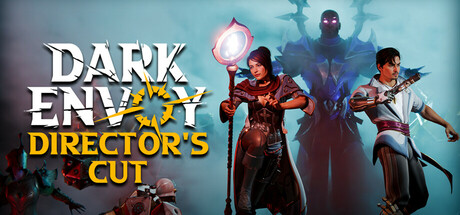
Compara los precios de Dark Envoy en tiendas de claves de confianza y encuentra la mejor oferta. Desarrollado por Event Horizon. Publicado por Event Horizon. Lanzado el 24/10/2023. Disponible en PC. Géneros: RPG.

Solid build-crafting wrapped in a steampunk-fantasy world that has more ambition than polish - worth your time if BG3 withdrawal is real and janky RTwP combat won't break you.

My first honest thought finishing Dark Envoy was: the class system deserved a better game around it. Event Horizon's follow-up to Tower of Time drops you into Jäan, a war-scarred world where a technology-worshipping human Empire and a magic-wielding League of old races have been grinding each other down for centuries. The 'Guns N' Sorcery' label is not marketing noise - muskets and magitech genuinely coexist in the art direction, and the steampunk-fantasy blend gives the world a visual identity that stands apart from the usual grey-stone dungeons. You begin by building two characters simultaneously, the sibling relic hunters Malakai and Kaela, choosing from four base classes - Warrior, Ranger, Engineer, and Adept - each of which branches into three specialisations at level seven, giving you options ranging from Guardian tank and Blademaster skirmisher on the martial side, to Elementalist nuker, Combat Medic, Summoner, Technomancer, and Gunslinger further along. Six recruitable companions expand your party further, and crucially, you can respec skills at any time without penalty, so pure experimentation is always on the table. Combat runs on a Real-Time-with-Pause system that also lets you engage a tactical slow-motion mode, giving you the breathing room to queue up ability chains, reposition your four active party members, and manually aim area-of-effect spells. When it clicks - an Adept Elementalist dropping ice AoEs while your Warrior Blademaster charges the flank - there is genuine satisfaction in the coordination. The system leans closer to isometric RTS than classic CRPG, which is an unusual angle that works in small doses. The problem is dose frequency. Encounter design leans heavily on wave-spawning: you clear a group, more enemies rush in from off-screen, repeat. Enemy AI commits almost entirely to direct assaults, so most fights devolve into a pause-queue-unpause cycle against an endless stream of identical formations. By mid-game the encounters stop teaching you anything new about your build and start testing your patience instead. That is filler, and I hate filler. The narrative side is where my CRPG heart took the bigger hit. The sibling dynamic between Malakai and Kaela has a real pull early on - impulsive brother versus more measured sister, with the player nudging their moral alignment through choices that affect how the story resolves. The faction war between Empire and League is framed as a genuine dilemma with no clean answer. Good setup. The execution, though, falls flat: companion characters have next to no arc, the faction choice lands with less weight than it should because neither side is written with enough specificity to make you actually care, and the dialogue has an anachronistic quality - a consequence of the science-versus-magic setting that was never fully ironed out in revision. The Director's Cut update reworked some opening cutscenes and added a new narrator, and it does put the game in a better place than launch, but the writing's bones were not restructured. Performance has been a consistent talking point since release - pathfinding glitches, texture pop, and the occasional hard freeze showed up in multiple reviews. The Director's Cut addressed some of this, but lingering technical hiccups remain a real factor depending on your hardware. On the positive side, the loot loop is generous, respeccing costs nothing, difficulty options scale from forgiving to genuinely punishing, and the whole campaign can be completed in co-op with a second player online, which softens the repetitive encounter problem considerably when you have someone to theorize builds with. If you played Tower of Time and liked Event Horizon's combat-forward approach, this is clearly a step up in scope, even if it does not fully clear the bar it set for itself. Bottom line: Dark Envoy is the kind of game that build-focused RPG players will get twenty-odd hours of real enjoyment from, provided they accept the narrative will not reward re-reads the way the genre's best entries do. It earns its mixed reception honestly - the class and specialisation system is genuinely interesting, the world has personality, and the tactical slo-mo combat has moments of real flair. But the wave-spam encounter design, underdeveloped companions, and post-launch technical baggage keep it firmly in the 'worthwhile at the right price' column rather than essential. Monika, Scout Team

Dark Envoy

Dark Envoy

24 oct 2023Event Horizon
GamerScout opina

Solid build-crafting wrapped in a steampunk-fantasy world that has more ambition than polish - worth your time if BG3 withdrawal is real and janky RTwP combat won't break you.

PC
Steam Deck VerifiedProtonDB Silver
Mejor precio disponible
€0.00
en N/A
Mínimo histórico: €1.15

Comparar precios(0 tiendas)

Cargando precios...

We may earn a commission when you buy games through links on this page — at no extra cost to you. It never affects our rankings or verdicts.

Historial de precios

Historical low
€1.1514 Jun 2026
Keyshops
€1.07€1.13€1.19€1.255 Jun11 Jun17 Jun22 Jun28 Jun
Tracking prices since 5 Jun 2026
Create alert

Capturas y multimedia

Acerca de Dark Envoy

My first honest thought finishing Dark Envoy was: the class system deserved a better game around it. Event Horizon's follow-up to Tower of Time drops you into Jäan, a war-scarred world where a technology-worshipping human Empire and a magic-wielding League of old races have been grinding each other down for centuries. The 'Guns N' Sorcery' label is not marketing noise - muskets and magitech genuinely coexist in the art direction, and the steampunk-fantasy blend gives the world a visual identity that stands apart from the usual grey-stone dungeons. You begin by building two characters simultaneously, the sibling relic hunters Malakai and Kaela, choosing from four base classes - Warrior, Ranger, Engineer, and Adept - each of which branches into three specialisations at level seven, giving you options ranging from Guardian tank and Blademaster skirmisher on the martial side, to Elementalist nuker, Combat Medic, Summoner, Technomancer, and Gunslinger further along. Six recruitable companions expand your party further, and crucially, you can respec skills at any time without penalty, so pure experimentation is always on the table. Combat runs on a Real-Time-with-Pause system that also lets you engage a tactical slow-motion mode, giving you the breathing room to queue up ability chains, reposition your four active party members, and manually aim area-of-effect spells. When it clicks - an Adept Elementalist dropping ice AoEs while your Warrior Blademaster charges the flank - there is genuine satisfaction in the coordination. The system leans closer to isometric RTS than classic CRPG, which is an unusual angle that works in small doses. The problem is dose frequency. Encounter design leans heavily on wave-spawning: you clear a group, more enemies rush in from off-screen, repeat. Enemy AI commits almost entirely to direct assaults, so most fights devolve into a pause-queue-unpause cycle against an endless stream of identical formations. By mid-game the encounters stop teaching you anything new about your build and start testing your patience instead. That is filler, and I hate filler. The narrative side is where my CRPG heart took the bigger hit. The sibling dynamic between Malakai and Kaela has a real pull early on - impulsive brother versus more measured sister, with the player nudging their moral alignment through choices that affect how the story resolves. The faction war between Empire and League is framed as a genuine dilemma with no clean answer. Good setup. The execution, though, falls flat: companion characters have next to no arc, the faction choice lands with less weight than it should because neither side is written with enough specificity to make you actually care, and the dialogue has an anachronistic quality - a consequence of the science-versus-magic setting that was never fully ironed out in revision. The Director's Cut update reworked some opening cutscenes and added a new narrator, and it does put the game in a better place than launch, but the writing's bones were not restructured. Performance has been a consistent talking point since release - pathfinding glitches, texture pop, and the occasional hard freeze showed up in multiple reviews. The Director's Cut addressed some of this, but lingering technical hiccups remain a real factor depending on your hardware. On the positive side, the loot loop is generous, respeccing costs nothing, difficulty options scale from forgiving to genuinely punishing, and the whole campaign can be completed in co-op with a second player online, which softens the repetitive encounter problem considerably when you have someone to theorize builds with. If you played Tower of Time and liked Event Horizon's combat-forward approach, this is clearly a step up in scope, even if it does not fully clear the bar it set for itself. Bottom line: Dark Envoy is the kind of game that build-focused RPG players will get twenty-odd hours of real enjoyment from, provided they accept the narrative will not reward re-reads the way the genre's best entries do. It earns its mixed reception honestly - the class and specialisation system is genuinely interesting, the world has personality, and the tactical slo-mo combat has moments of real flair. But the wave-spam encounter design, underdeveloped companions, and post-launch technical baggage keep it firmly in the 'worthwhile at the right price' column rather than essential.

Monika
Monika · Scout Team

RPGs

Etiquetas

singleplayermultiplayerachievementstrading-cardscloud-savestier:sub-5Real-Time with PauseTactical Slo-MoDual ProtagonistFree RespecOnline Co-Op CampaignWave Encounter DesignSteampunk FantasyFaction Choice

Requisitos del sistema

Mínimos

OS
Windows 10 64-bit
Memory
16 GB RAM
Storage
40 GB available space
Graphics
Nvidia GeForce GTX 1060 6gb / AMD Radeon RX 580 8gb
Processor
Intel i5 6500 / AMD Ryzen 5 1600

Recomendados

OS
Windows 10 64-bit
Memory
32 GB RAM
Storage
40 GB available space
Graphics
Nvidia Geforce 3060ti 8gb / AMD Radeon 5700XT 8gb
Processor
Intel i7 10700 / AMD Ryzen 7 5800X

Sigue explorando

Community Discussion

Be the first to comment on Dark Envoy.

Reseñas y valoraciones

No hay valoraciones disponibles

Información del juego

Desarrolladora
Event Horizon
Distribuidora
Event Horizon
Fecha de lanzamiento
24 oct 2023

Alerta de precio

¡Recibe un aviso cuando el precio baje de tu objetivo!

Crear alerta

Más de Event Horizon

Compra mejor: guías útiles

¿Buscas más? Mira juegos como Dark Envoy →

Preguntas frecuentes sobre Dark Envoy

¿Cuánto cuesta Dark Envoy?

El precio de Dark Envoy cambia a menudo y varía según la tienda, la edición y la región. La tabla de precios en vivo de esta página compara las ofertas más baratas en stock de tiendas de claves de confianza como Eneba y Kinguin, para que siempre veas el precio más bajo actual antes de comprar.

¿Dónde puedo comprar Dark Envoy más barato?

Compara los precios de Dark Envoy en todas las tiendas verificadas en la tabla de precios de esta página. Listamos las ofertas de claves y tiendas más baratas en stock, actualizadas con frecuencia, para que siempre veas la mejor oferta actual antes de comprar.

¿En qué plataformas está disponible Dark Envoy?

Dark Envoy está disponible en PC.

¿Cuándo se lanzó Dark Envoy?

Dark Envoy se lanzó el 24 de octubre de 2023.

¿Quién desarrolló Dark Envoy?

Dark Envoy fue desarrollado por Event Horizon.